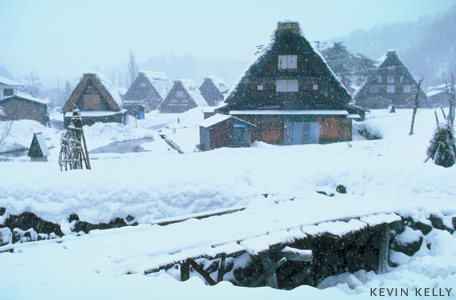
It takes a village, they say to raise a child - certainly here it takes one to raise a roof. They are made of straw, and last for around 30 years, but a fortune to maintain and replace. Most of the houses now are ryokan, for tourists who pop in for a night and such - I admit to being one of them.
My family was there in high summer, where the crickets chirped by the garden pond outside our room, while I wandered the village and watched dusk fade to night. Compared to Tokyo, it was so quiet. The next morning, awkened by the village announcements at six, we walked along the dusty roads and watched foot long trout swimming in the roadside ditches. The climb up to look down on the valley was tiring but well worth it. It is a way of life which is vanishing just you look at it: because how can the farmers survive when the tourists are so very popular?
I'm surprised to see this in winter: I've been told that people are snowed in there come November.
Dianna writes:
It takes a village, they say to raise a child - certainly here it takes one to raise a roof. They are made of straw, and last for around 30 years, but a fortune to maintain and replace. Most of the houses now are ryokan, for tourists who pop in for a night and such - I admit to being one of them.
My family was there in high summer, where the crickets chirped by the garden pond outside our room, while I wandered the village and watched dusk fade to night. Compared to Tokyo, it was so quiet. The next morning, awkened by the village announcements at six, we walked along the dusty roads and watched foot long trout swimming in the roadside ditches. The climb up to look down on the valley was tiring but well worth it. It is a way of life which is vanishing just you look at it: because how can the farmers survive when the tourists are so very popular?
I'm surprised to see this in winter: I've been told that people are snowed in there come November.